What Pilates taught me about Trauma Informed Care, Consent and Body Tending
I started Pilates in October of 2025, and I did not want to.
I have an autoimmune condition, I sit at the computer for work, and I often battle leg swelling, body aches and fatigue. My rheumatologist suggested exercise with an emphasis on strength training. Not to lose weight, not to get toned — to stretch, to build strength, to let my body get stronger at a pace it could actually tolerate. I said yes the way you say yes to a doctor: agreeably, and with no intention of enjoying it.
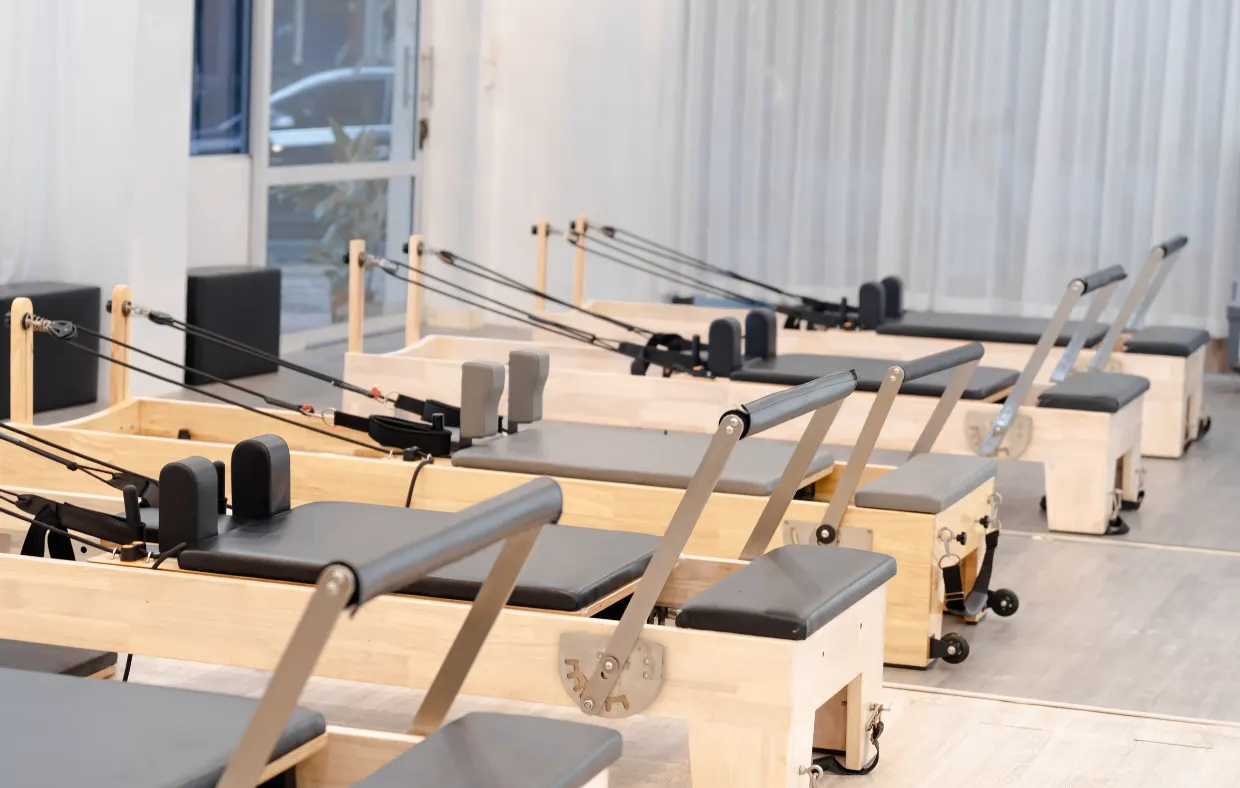
Then I walked in and saw the reformers.
If you have never seen one, picture a padded platform on rails, wrapped in springs and straps and pulleys, and picture yourself lying down on it in front of strangers. My first thought was immediate and total: this is not for me. Not "I'll be bad at this." Something closer to I don't belong in this room, and everyone is about to find that out.
Ten months later, I want to write about why that turned out to be wrong — and about what I found in that room that I did not expect to find.
What I actually walked into
Here is what happens at the start of every class.
The instructor goes around the room and asks each person, individually, whether anything is going on in their body today. Any aches. Any pain. Any sensitivity. Any place that feels vulnerable right now.
This question is not a liability waiver. It's a real question, with a pause afterward for a real answer.
And then — this is the part that undid me — they use the answer. Sore knee, and the exercise gets modified. Tender low back, and there's a different setup waiting when you get there. The message underneath is not let's see if you can push through. It's: you can still be in this room, in a body that hurts today, and the movement will bend toward you. Use your breathing as your anchor.
Checking in to see where the person is at is trauma informed care because we are taking into account the wounds and pains that might be showing up in the room with the person.
I have used this approach in my therapy practice. Checking in with my client, welcoming all emotions, wounds, and vulnerabilities into the space, reminding them that our practices and interventions will bend toward them. This is also ethical culturally responsive care.
Connecting with my body and working toward healing
There were times in which I tried to white-knuckle discomfort or pain. Two months before starting pilates I dislocated my right shoulder. Although there were no breaks or fractures, I had lingering pain and discomfort for months. When I picked up heavy weights, my instructor told me to get lighter ones because of my shoulder. I'd say, "I have a tender shoulder" when asked at the beginning of every class. I felt it the worse when we had to plank. So planking was not easy for several months. Until one day, 8 months later, it was much easier because the pain went away.
I had to learn to go slower, with intentional movement to heal. This is a lesson I'd have to learn over and over again in my adjacent burnout recovery journey.
Consent: The sentence I didn't expect to hear
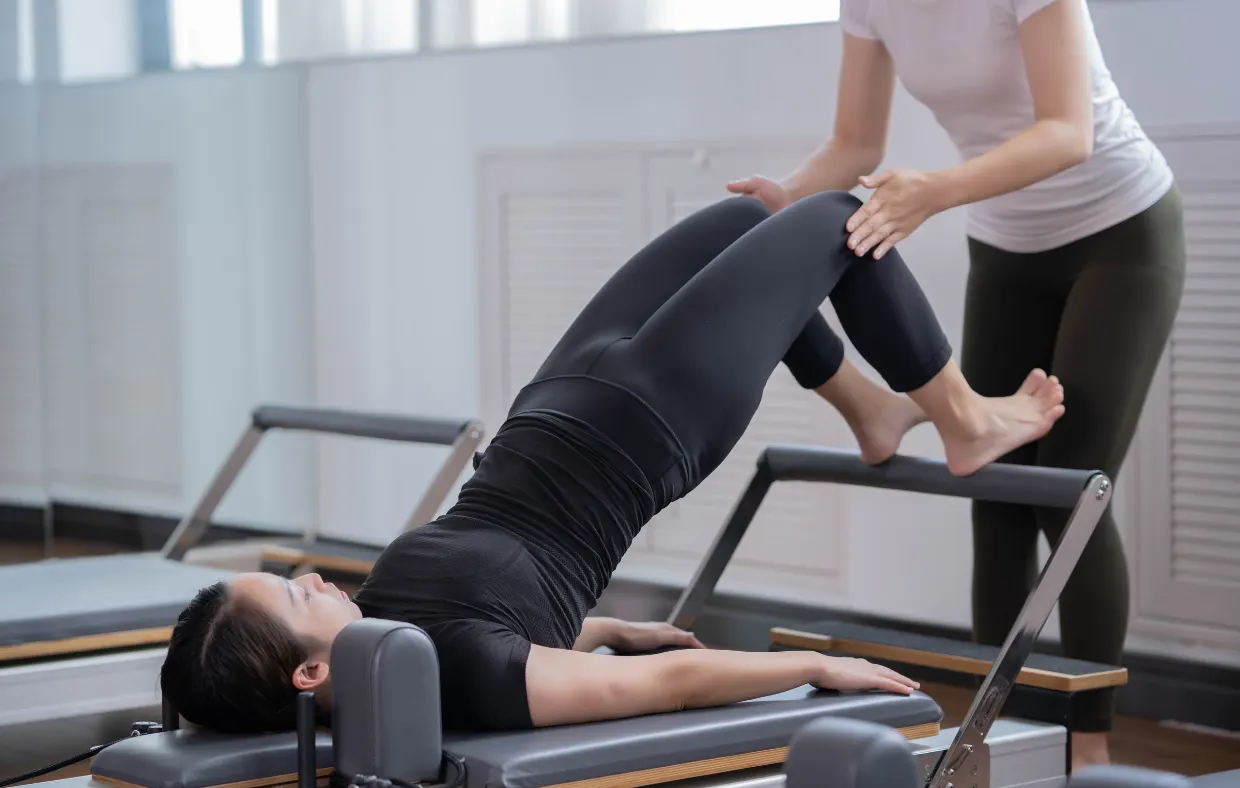
Somewhere in my first few weeks, an instructor said something along these lines before class:
I do hands-on corrections, because positioning matters on the reformer. But if that's not something you're comfortable with, tell me, and I'll respect that boundary.
I sat with that for a long time afterward.
Notice what that sentence does. It names the touch before it happens. It explains why the touch exists — this isn't arbitrary, there's a reason. It offers a genuine out. And critically, it puts no cost on saying no. There's no implication that declining makes you difficult, or fragile, or a worse student. The instructor has already decided that no is an acceptable answer, and said so out loud, before anyone had to be brave.
That's informed consent. In a fitness studio. Offered freely, to a room of people who mostly came for their tight hamstrings.
I don't think most of my classmates register it as anything unusual. But a lot of us have been in bodies that were touched without warning, adjusted without asking, handled by people who assumed access. For anyone carrying that, a sentence like this changes what the next hour is. It isn't a nicety. It's the thing that makes the room safer.
This is also trauma informed care. Leading with consent gives our clients autonomy, self determination and control back.
Body Tending: From "tone this" to "tend to this"
The other shift happened slowly, and I only noticed it in retrospect.
Some of the instructors tell you why. Why this stretch. Why this sequence. What it protects. They'll talk about strengthening tendons, about preventing back pain, about what all of us are doing to our spines and shoulders by sitting at computers for a living.
There's a move where you roll a tennis ball under your foot. I remember thinking, at first, that this was filler. It isn't. Releasing the tissue under your foot doesn't stop at your foot — that fascia is continuous up the back of the leg and the spine, which is why people often find they can fold forward further right afterward, without having stretched a single hamstring. Your feet also carry a dense concentration of the sensors that tell your brain where you are in space. So the tennis ball is doing two things at once: releasing tissue, and turning the volume up on your own signal. One instructor said that this connection between the body and brain weakens with age and is a main cause of elder falls and trips.
Explanations helped me move out of one framework and into another.
The old one: I am trying to make this muscle smaller, or firmer, or more acceptable. The old one is a punishment economy. It runs on dissatisfaction, and it has to keep you dissatisfied to keep you paying. It caters to impossible and unrealistic beauty and body standards and punishes the aging body.
The new one: this is going to serve me at seventy. This is going to mean fewer injuries, less pain, a body I can keep living in. My body isn't a project with a deadline. It's the thing carrying me the whole way. It makes me deeply grateful for all my body's trying to do for me and the consequence of not listening or taking care of it.
I want to be honest that this reframe was not a mindset choice I made one morning. It came from being given information, repeatedly, by people who knew that information and body education is power and access to health.
In mental health, we call this information psychoeducation and it's actually a part of treatment. We're providing mental health education about the diagnosis, what helps, hurts, biological processes, etc. I've found that the more education I share with my clients about their symptoms and the way the brain and body respond to traumas, the more they understand themselves. I use psychoeducation at every session so that my clients can approach their decisions for healing in a more informed way. It reminds me of those video memes of people going for a walk for what call, their "stupid mental health." It's true. Walking and body movement is nourishing for the body and nervous system. Movement is also a first like intervention for depression.
What absence of pilates taught me
The clearest data came from the weeks I didn't go.
When I stop moving, my back tightens. My tailbone aches. It's not subtle, and it doesn't take long. I used to read those signals as random — a bad chair, a bad week, bad luck. Now I read them as information arriving on schedule.
That's a small thing that is not a small thing. It means my body has become something I can hear, something I'm more connected to.
Learning to trust myself
The instructors keep handing the decision back to you. Is this the day to go deeper, or the day to hold where you are? Where is your body actually at, right now, not where was it Tuesday?
They also normalize, out loud and often, that you may not go as far as the person on the reformer beside you, and that this means nothing. Every body is different. Every body arrived here from somewhere different.
What that builds, over months, is not flexibility. It's interoception — the capacity to sense your own internal state and interpret it accurately. And it's the thing so many of us have had trained out of us, by injury, by illness, by chronic stress, by systems that rewarded us for overriding ourselves and called it discipline.
I keep coming back to this: the studio is teaching people to trust their own reading of their own body. That's not a fitness outcome. That's a repair.
Because I'm a trauma and burnout specialist, I work with people who have had to shut off these body cues, or their cues are like an overly sensitive alarm predicting danger. And to be fair, there are a lot of realistic fears and uncertainty that forces nervous systems into these types of responses. So if you're noticing this in yourself, please give yourself some grace and understand that your nervous system is trying it's best to keep you a little bit safer in times is turbulence and uncertainty.
What I'd say to you, if your doctor just told you to try pilates
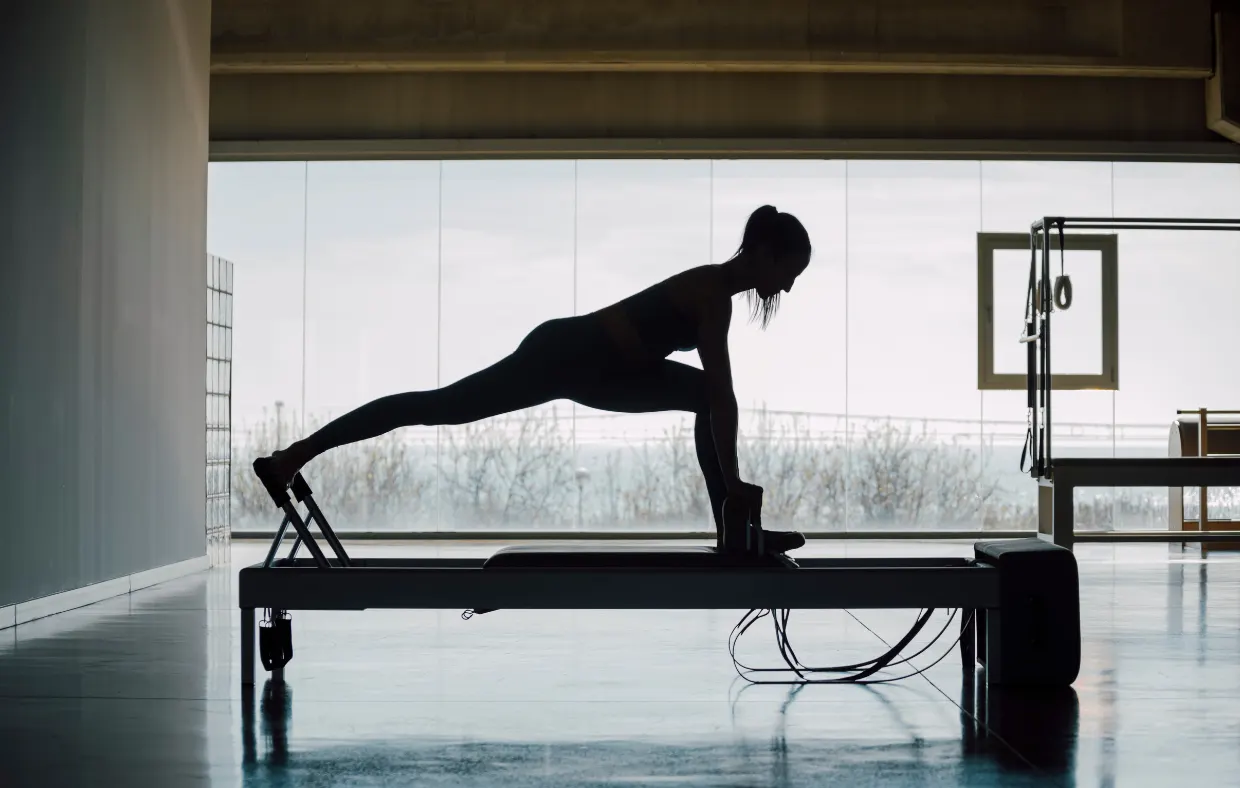
You are allowed to be scared of the machine or a new workout. The machine is genuinely intimidating and looks like a device for exposing your inadequacy in front of strangers. At the same time, it can also be a machine that helps you in connecting with your body and working with it's system of self-healing and repair.
You are allowed to say no to being touched, and a good instructor has already decided that's fine.
You are allowed to arrive in a body that hurts today. That is not a reason to stay home. Rather, it's information for the person teaching you, and for you to recognize your limits and pain cues.
And you are allowed to go slower than everyone else in the room for as long as you need to, because the goal was never to win the room. The goal was to still be walking comfortably in thirty years.
I love this practice. I did not expect to. And what I love most about it is not what it's done for my flexibility — it's that I found, in an unlikely room full of springs and straps, a group of people quietly practicing the thing I've spent my whole career arguing for: meet the body where it is, learn about your body and its processes, tell it the truth, ask before you touch it, and let it set the pace.
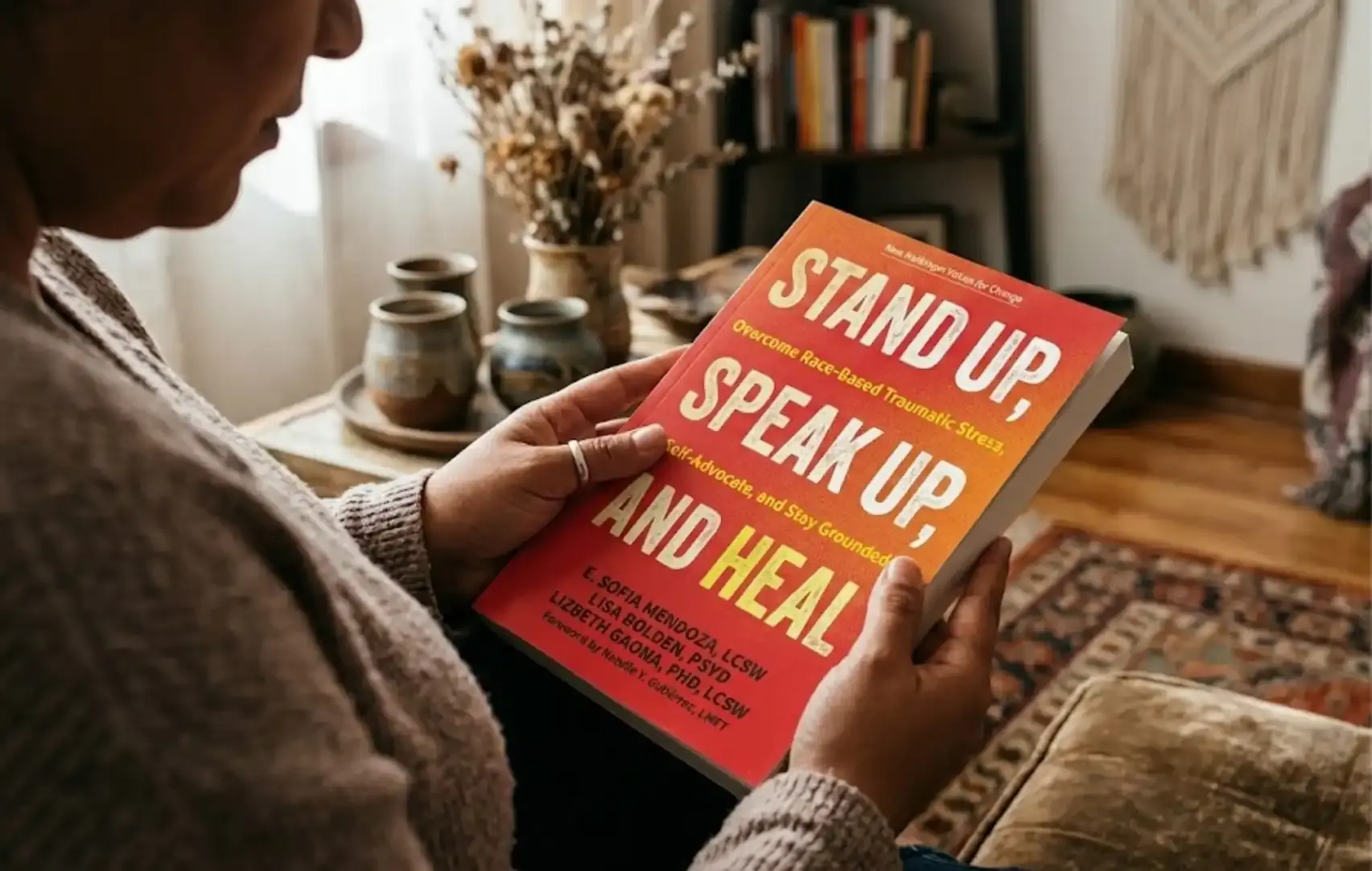
Check out my newest co-authored book, "Stand Up, Speak Up and Heal" here.